Fort Lauderdale, May 18, 2026: On Saturday, May 16, 2026 the rhythmic heartbeat of Haiti echoed through the NoMi Culture & Arts Village as thousands gathered for another unforgettable edition of the Haitian Compas Festival. What began decades ago as a celebration of Haitian music and identity has evolved into one of the most culturally vibrant Caribbean gatherings in the United States; a living postcard of Haitian pride, resilience, elegance, and joy.
From the moment I arrived, the atmosphere felt very welcoming even though I looked like a white sheep in a paddock of black sheep. The special vibe of the compas music is very conducive to making new friends and connecting with new friends caribe-style. There was music seemingly coming from every direction, the scent of griot and pikliz drifting through the air, and groups of friends and families dancing as though the outside world had temporarily disappeared. It did not feel like a standard concert festival. It felt like stepping into a cultural celebration where everyone was invited to participate.
The music began before sunset and stretched deep into the tropical evening. Compas legends and contemporary stars transformed the festival grounds into a giant open-air dance floor where every bass line seemed to move directly through the body. I especially enjoyed watching different generations dancing together; grandparents who grew up with classic Compas rhythms stood beside younger fans filming performances on their phones while singing every lyric word for word.
Among the celebrated performers were some of the most beloved names in Haitian music. Their appearances reminded attendees why Compas remains one of the Caribbean’s most emotionally rich musical traditions. The polished brass sections, romantic keyboard melodies, deep percussion grooves, and smooth vocal harmonies created a soundscape that was unmistakably Haitian.
Fans erupted for performances by T-Vice, Klass, Nu Look, Kai, Zafem, Plukey Duke, The Oswald Compas Band, Kenny Haiti, Bedjine and K-Dilak, Rutshelle Guillaume, and several rising talents carrying the torch of modern Haitian music with confidence and style. Some performers leaned into nostalgia and romance while a few others urban and not suburban; yet they all stayed rooted in traditional rhythm of Compas.
One thing that truly stood out to me was how upscale parts of the festival experience have become over the years. The VIP hospitality areas reflected the growing prestige and economic influence of the event itself. Certain VIP Media representatives and invited guests enjoyed elevated accommodations that rivaled many major lifestyle festivals in South Florida.
One of the more talked-about offerings was the complimentary media pass package, a package valued at roughly $4,000 if purchased directly through the festival’s official channels. It included 12 VIP tickets, four top-shelf bottles, one standard bottle, and three parking passes. The package became a symbol of the festival’s increasingly sophisticated hospitality culture and its appeal to entertainment executives, influencers, business leaders, and media personalities from throughout Florida and beyond.
Another fascinating part of the experience flowed not from the stage, but from the bars and hospitality tents where Haitian rum became a centerpiece of conversation. Guests toasted throughout the weekend with expressions of Barbancourt and other Haitian spirits, many unaware of the remarkable family saga behind one of Haiti’s most famous rum dynasties.
"My Business School Professor Big Jim, an Adventure Traveler and Scuba Diver told me about Jane Barbancourt Rum in 1992, he said it was the best in the world!"
– Jay Shapiro
Long before modern branding battles and international distribution deals, Jane Barbancourt became part of a lesser-known chapter of Haitian rum history. A member of the extended Barbancourt family, she and her husband Siegfried Linge; a German immigrant and accomplished perfume maker; relocated to Haiti during the mid-20th century and launched their own rum distillery high in the mountains overlooking Port-au-Prince. Their products were crafted at the picturesque “Jane Barbancourt Castle” in Boutiller, where mountain air and Caribbean tradition blended into a uniquely Haitian enterprise.
Their spirits and fruit liqueurs developed a loyal following, though they would forever exist in the shadow of the legendary Rhum Barbancourt brand founded in 1862 by Dupré Barbancourt. The original company, operated for generations by the Gardère family, had already become synonymous with Haitian rum excellence throughout the Caribbean and abroad.
Eventually, disputes emerged over the use of the Barbancourt name itself. During the 1950s, legal battles and trademark disagreements reshaped the future of the competing labels. The original Société du Rhum Barbancourt successfully defended its primary rights to the family name, cementing its place as Haiti’s signature rum house. Over time, Jane Barbancourt’s operation evolved through restructuring and ultimately became known as Berling S.A., producer of the respected Rhum Vieux Labbé brand still appreciated today by rum enthusiasts familiar with Haiti’s deeper spirits culture.
At the festival, however, none of that history felt academic. The rum was part of the celebration itself; poured generously beside plates of Caribbean cuisine while old friends reunited and strangers quickly became companions. I found that aspect especially memorable. There was a warmth to the hospitality that felt authentic and deeply rooted in Haitian culture.
Beyond the music and spirits, the Haitian Compas Festival served as a reminder that Haitian culture remains one of the most influential and underappreciated cultural forces in the Americas. Haiti gave the world revolutionary history, extraordinary art, cuisine layered with African and French influences, and music capable of turning heartbreak into dance.
Walking through the festival grounds felt a bit like wandering through a Caribbean village celebration transported into South Florida. One moment featured elegant women in flowing tropical dresses dancing Compas beside the stage; the next revealed domino games unfolding beneath shaded tents while vendors sold handmade jewelry, paintings, flags, and fresh sugar cane juice. Every corner carried a different rhythm.
For many attendees, the festival represented more than entertainment. It was heritage preservation. It was memory. It was community. Haitian Americans from across Florida, New York, New Jersey, Montreal, and beyond embraced one another with the warmth of extended family returning home. I'm looking forward to attending the 30th Annual Haitian Compas Festival in 2028 and perhaps even sponsoring with a promotional booth for the movie I'm producing "Buddy from Brooklyn" which comes to theatres globally shortly thereafter.
- Jay Shapiro
# # #
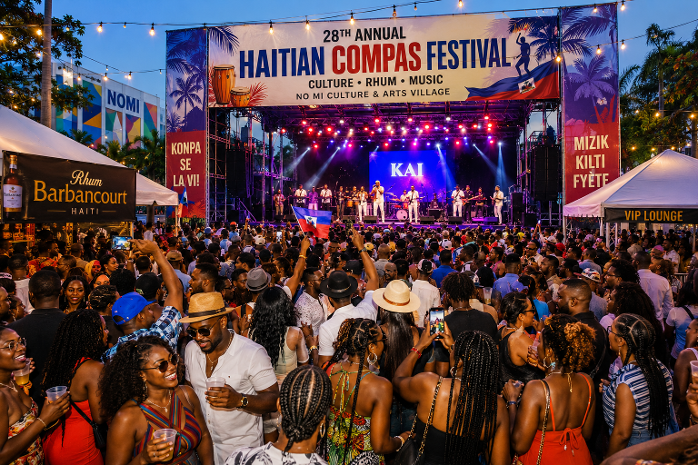
28th Annual Haitian Compas Festival Miami
Places to dance Haitian Compas in South Florida:
Name: Moca Cafe & Lounge
Location: 738 NE 125th St. Miami, FL 33161
Tel. 305-899-2699
Hours: 10pm till 4am Friday & Saturday
Cover Charge: Varies
Website: www.mocacafelounge.com
Location: 4322 State Road 7 Lauderdale, Lakes, FL 33319
Tel. 954-867-5309
Hours: 11am - 10pm
Name: Kompa City Music Store
Location: 14744 NE 6th Ave Miami, FL 33161
Tel. 305-940-9665
Hours:
Cover Charge:
Website:
Name: Hollywood Live Nightclub
Location: 2333 Hollywood Blvd Hollywood, FL 33020
Tel. 561-530-8814 or 954-681-7900
Hours: 6-2AM
Cover Charge:
Website: www.hollywoodlivenightclub.com
Name: Elayne's Banquet Hall
Location: 2425 North 10th Ave Lake Worth, FL
Tel. Disc Jockey Wicked 561-251-2406
Hours:
Cover Charge:|
Website: